Divorce Records in Sacramento County give you direct access to the essential details of a marriage dissolution, from the case number to the final judgment date. When you search Sacramento County divorce records online, you can view the filing date, names of both parties, and the court that handled the case, all without leaving home. This immediate visibility helps people confirm a divorce case status, locate a certified divorce record copy, or verify a divorce decree for legal or personal reasons. By entering the spouse’s name, case number, or filing date into the official case‑search portal, you quickly retrieve divorce court records, divorce documents, and even post‑judgment orders. The system also flags restricted or sealed records, ensuring privacy while guiding you to the correct request process for certified copies or a divorce record request.
Divorce Records Sacramento County also serve as a reliable source for related family law information, such as property division, child custody, and support orders. A simple Sacramento County divorce record lookup can reveal the exact divorce case outcome, the date of the final divorce judgment, and any subsequent modifications to parenting or visitation orders. If you need a certified divorce record, the online portal outlines copy fees, identification requirements, and processing time, while also explaining how to request records by mail or in person. Understanding these steps reduces the chance of missing documents, incorrect case numbers, or delayed updates, and ensures you receive accurate, official records for any legal or personal need.
How to Search Divorce Records
You can search Divorce Records in Sacramento County through the official case-search portal managed by the Sacramento County Superior Court. This online tool lets you view basic case details, confirm the status of a filing, including background check, and check the date a final judgment was issued. The portal serves anyone who needs to verify a divorce case, request a copy of a decree, or gather facts for a legal matter. Results appear within seconds, and the system updates regularly to reflect new filings, sealed status changes, or corrections to existing entries.
Official Search Portal: https://www.saccourt.ca.gov/online-services/case-search
Steps to Search
- Open the official case-search portal listed above using a current web browser.
- Choose the case type labeled “Family Law” or “Dissolution” from the dropdown menu.
- Enter the last name of either spouse, the full case number, or a filing date range to narrow your results.
- Review the list of cases that match your search terms and click the relevant entry to view the case summary.
- Note the case number, court location, filing date, and judgment date for your records or follow-up requests.
How to Find Divorce Records
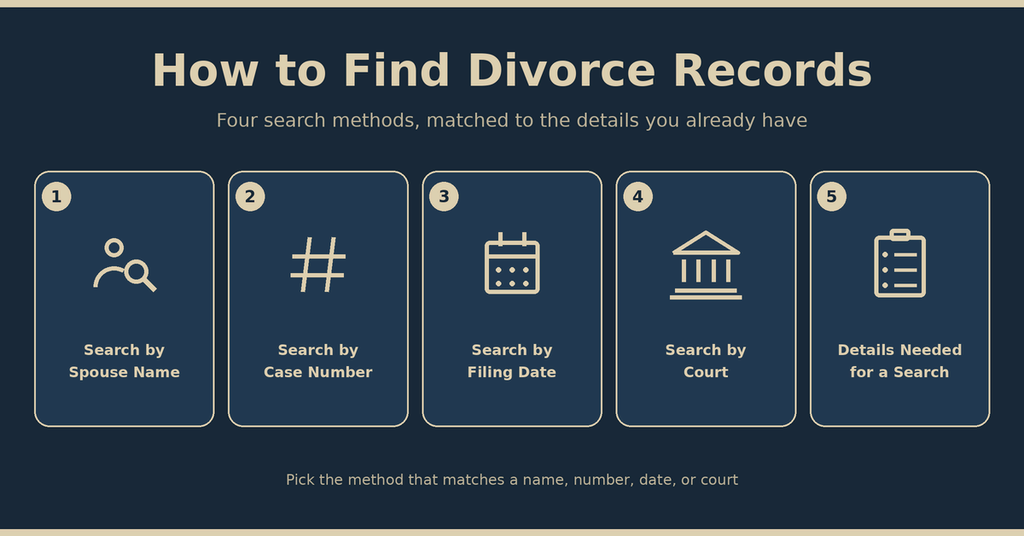
Finding Divorce Records in Sacramento County requires selecting the right search method based on the details you already have. The court system accepts four primary search methods, each built to match a specific piece of data. Choosing the correct method saves time and reduces the chance of errors or empty results. The right approach depends on whether you know a name, a number, a date, or a court location.
Search by Spouse Name
Searching by spouse name is the most common method when you do not have a case number. You enter the last name of either party into the portal, and the system returns a list of matching cases. Results often show middle names or initials to help you pick the correct entry. This method works best when the name is spelled correctly and the divorce took place in Sacramento County.
Search by Case Number
A case number search gives you the fastest and most accurate result when you already have the number from a previous document or legal filing. Sacramento County assigns each dissolution case a unique identifier, such as a “FL” prefix followed by digits and a year code. Entering the full number in the correct format eliminates confusion with other family law cases.
Search by Filing Date
If you know the approximate date the divorce was filed, you can filter the search by a date range. This method helps you locate cases that match a specific time period, such as a calendar year or a multi-year span. The portal displays all dissolution cases filed within that window, sorted by the date the court received the petition.
Search by Court
You can also limit your search to a specific court location within Sacramento County. Most family law cases are handled at the clerk’s office located on Power Inn Road, but some matters may be assigned to other branches. Selecting a court filters out cases from other locations and focuses the results on that venue.
Details Needed for a Search
Before you begin, gather the last name of either spouse, the full case number if available, and an approximate filing date. Knowing the correct court location also helps when cases were filed in a specific branch. Having these details ready reduces the number of search attempts and improves the accuracy of your results.
What Divorce Records Show
Divorce Records in Sacramento County present a structured set of facts about a marriage dissolution. Each record entry gives you a snapshot of the case, the parties involved, and the court’s final actions. The table below lists the core data fields you will see in a typical record entry.
Names of the Parties
The record shows the full legal names of both spouses, middle names when available. The names match those used on the original divorce petition and any later amendments. This data helps you confirm that you have located the correct case when searching by name.
Case Number
Each case receives a unique number that stays with the file for its entire life. The number uses a prefix that identifies the case type, followed by digits and a year code. You can use this number to retrieve the case later, request certified copies, or reference the file in legal documents.
Filing and Judgment Dates
The filing date marks the day the court received the divorce petition. The judgment date shows when the court issued the final order ending the marriage. Both dates appear in standard month-day-year format and help you track the timeline of the case.
Court Details
The record lists the court location that processed the case, along with the assigned department or judicial officer. Court details help you direct certified copy requests, schedule hearings, or contact the correct clerk’s office. Sacramento County family law cases are typically handled at dedicated family court facilities.
Case Status
Case status tells you whether the divorce is open, pending, closed, or sealed. A closed status means the court has issued a final judgment and the case is no longer active. Sealed cases have restricted access and require a court order to view or obtain copies.
Divorce Outcome
The outcome reflects the final resolution of the case, such as a default judgment, a settlement, or a contested ruling. The outcome field may also note whether the divorce was dismissed before reaching a final judgment. Reviewing the outcome helps you understand the legal result of the case.
Divorce Case Documents
Divorce Records in Sacramento County include a range of documents filed with the court during the life of a case. Each document serves a specific legal purpose and may be available through the online portal or by request from the clerk’s office. The list below shows the main document types you may encounter.
- Divorce Petition (FL-100)
- Response to Petition (FL-120)
- Financial Disclosures (FL-140, FL-150)
- Court Orders and Rulings
- Final Judgment (FL-180)
- Notice of Entry of Judgment (FL-190)
- Post-Judgment Motions and Orders
Divorce Petition
The divorce petition is the first document filed to start a dissolution case. It lists the names of both spouses, the date and location of the marriage, and the grounds for the divorce. The petition also outlines the requests for property division, custody, and support that the filing spouse asks the court to address.
Court Filings
Court filings include every document submitted by either party after the initial petition. These may include responses, motions, financial declarations, and requests for temporary orders. The clerk’s office stamps each filing with the date received, which becomes part of the official record.
Court Orders
Court orders are the written decisions issued by a judicial officer during the case. Orders may address temporary issues, such as child custody or spousal support, before the final judgment. Each order carries a case number and the judge’s signature, making it a binding legal instruction.
Divorce Decree
The divorce decree is the formal order that ends the marriage. It lists the terms of the divorce, such as property division and custody arrangements. Sacramento County issues the decree as part of the final judgment package, and it becomes effective once the court enters it.
Final Judgment
The final judgment is the official document that completes the divorce. It shows the date the court dissolved the marriage and lists the legal obligations of each party going forward. The final judgment is the document most people need when they request a certified copy of their divorce record.
Post-Judgment Documents
Post-judgment documents include any filings made after the final judgment, such as requests to modify custody or support orders. These documents show how the case has changed since the divorce was finalized. They remain part of the official record and can be requested through the clerk’s office.
Sacramento County Divorce Records Access
Sacramento County provides several ways to access Divorce Records, from online search tools to in-person visits to the clerk’s office. Most basic case data is open to the public without restrictions, but some records have limited access based on legal protections. The table below compares the main access methods.
Public Divorce Records
Public Divorce Records are open to anyone who wants to view them. The Sacramento County Superior Court makes basic case data available through the online portal, and the clerk’s office provides access to physical files during business hours. You do not need to state a reason to view public records.
Online Case Access
The online case access system shows you real-time data about active and closed cases. You can search by name, case number, or filing date, and view a summary of each result. The portal operates 24 hours a day and updates as new filings and status changes become available.
Clerk’s Office Records
The clerk’s office maintains the official paper and electronic files for every divorce case filed in Sacramento County. You can visit the office to view files, request copies, or ask questions about specific cases. Staff members are available during posted business hours to help you locate the records you need.
Restricted Records
Restricted records are files that the court has limited by law or judicial order. Access to these records requires a court order, a specific legal interest, or written authorization from a judge. Examples include cases involving sealed financial data or sensitive personal details.
Sealed Documents
Sealed documents are filed under a court order that prevents public viewing. The court may seal records to protect children, financial privacy, or personal safety. To view a sealed document, you must file a motion with the court and show a legal reason for access.
Confidential Details
Confidential details include social security numbers, financial account numbers, and certain personal identifiers that the court shields from public view. Even when the rest of the record is open, including property search, these details are redacted or removed to protect the parties involved. Confidential details cannot be released without proper legal authority.
How to Obtain Divorce Records
You can obtain Divorce Records in Sacramento County through three main methods: online requests, mail requests, and in-person visits. Each method has its own processing time, fees, and identification rules. The right choice depends on how quickly you need the records and whether you require certified copies.
Online Requests
The online case-search portal lets you view basic records for free, but certified copies require a separate request. You submit a certified copy request through the portal, pay the fee, and receive the document by mail or email. Online requests are processed faster than mail or in-person requests and let you track the status of your order.
Mail Requests
You can request records by mail by sending a written request, a copy of your identification, and the correct fee to the clerk’s office. Include the case number, the full names of both parties, and the type of record you need. Mail requests take longer to process than online or in-person requests.
In-Person Requests
Visiting the clerk’s office in person lets you request records and receive them the same day in many cases. You fill out a request form at the counter, show valid identification, and pay the required fee. In-person requests are useful when you need records quickly or want to review a file before requesting copies.
Identification Requirements
You must present a valid government-issued photo ID when requesting certified copies of Divorce Records. Acceptable forms of ID include a driver’s license, state identification card, passport, or military identification. The clerk’s office uses this ID to verify your identity and prevent unauthorized access to records.
Copy Fees
The clerk’s office charges a fee for each copy of a Divorce Record, and certified copies cost more than regular copies. The fee schedule is posted on the court’s website and at the clerk’s office counter. Accepted payment methods include cash, check, money order, and credit or debit cards for in-person and online requests.
Certified Copies
Certified copies of Divorce Records carry an official court seal and signature, making them legally valid for use in other courts, government agencies, and private transactions. You can order certified copies online, by mail, or in person. Most legal and financial institutions require certified copies rather than regular photocopies.
Divorce Records and Case-Related Details
Divorce Records often contain case-related details about property, custody, and support that affect the parties after the divorce is final. Reviewing these details helps you understand the full scope of a case and its ongoing obligations. The list below highlights the main types of case-related data found in Divorce Records.
- Property and debt division orders
- Child custody and conservatorship arrangements
- Child support calculations and payment terms
- Spousal support awards and termination dates
- Parenting plans and visitation schedules
- Post-divorce modification requests and orders
Property Division
Property division records show how the court allocated marital assets and debts between the spouses. These records may include orders about real estate, retirement accounts, vehicles, and other shared property. Reviewing property division orders helps you confirm how the court divided specific assets in a given case.
Child Custody and Conservatorship
Child custody and conservatorship records detail the legal and physical custody arrangements for any minor children. The records show which parent has decision-making authority and where the children will live. Conservatorship orders remain in effect until a court modifies them or the children reach the age of majority.
Child Support
Child support records list the amount of support ordered, the payment schedule, and the parties responsible for payments. The court bases these orders on state guidelines that consider each parent’s income and the children’s needs. Child support orders can be modified if circumstances change after the divorce is final.
Spousal Support
Spousal support records show whether the court ordered one spouse to pay support to the other and the amount and duration of those payments. Spousal support, sometimes called alimony, is based on factors such as the length of the marriage, each spouse’s income, and the standard of living during the marriage.
Parenting and Visitation Orders
Parenting and visitation orders outline the schedule each parent will follow with the children, including holidays, vacations, and special occasions. These orders are part of the case file and remain in effect until the court changes them. They also cover transportation arrangements and communication rules between parents and children.
Post-Divorce Modifications
Post-divorce modifications are court orders that change the terms of an existing divorce judgment. Common modifications include adjustments to custody, support, or visitation based on changed circumstances. These modifications are filed after the original judgment and become part of the ongoing case record.
Divorce Record Privacy and Availability
Divorce Records in Sacramento County balance public access with privacy protections for sensitive details. The court limits access to certain records to protect the parties and their children. Knowing which parts of a record are public and which are restricted helps you avoid requesting data that is not available to the general public.
Protected Personal Details
Protected personal details include social security numbers, dates of birth, and financial account numbers. The court removes or redacts these details before making records public. Protected data is available only to the parties named in the case, their attorneys, and other authorized individuals.
Financial Details
Financial details, such as income statements, tax returns, and asset valuations, are often filed under seal or with redactions. The court restricts access to these documents to protect the parties’ financial privacy. You may need a court order or written consent to view sealed financial records.
Child-Related Details
Child-related details, including custody evaluations, minor children’s names, and sensitive family records, receive extra protection. The court may limit access to these records to safeguard the children’s welfare. Requests for child-related details often require a judge’s approval before release.
Sealed Case Materials
Sealed case materials are documents that the court has ordered kept from public view. These materials remain part of the official file but are not available for general public access. To view sealed materials, you must file a motion and demonstrate a legal reason for access.
Records With Limited Access
Records with limited access include cases where the court has issued a protective order or where the case involves sensitive matters such as domestic violence. Access to these records is restricted to the parties, their attorneys, and other individuals named in a court order. The clerk’s office can tell you whether a specific record has limited access.
Divorce Record Accuracy and Search Limitations
Divorce Records can have accuracy issues or search limitations that affect your ability to find the right data. Knowing the common limitations helps you adjust your search and avoid wasted time. The list below shows the main accuracy and limitation issues you may face.
- Recently filed cases may not appear immediately in the online system
- Name spelling errors can lead to empty or incorrect results
- Older archived cases may have different case number formats
- Sealed or restricted records do not show full details in public searches
- Updates to case status may take time to appear online
- Records filed in another court will not appear in Sacramento County searches
Confirming the Correct Divorce Case
Confirming the correct divorce case requires checking the names, dates, and case number against the data you have. Compare the details in the search result to the facts you know, such as the date of marriage or the names of the children. If the details do not match, try a different search method or contact the clerk’s office for help.
Matching Spouse Names
Matching spouse names means ensuring the name in the record matches the person you are researching. Names may appear in different formats, such as with or without a middle name or with a maiden name and a married name. Review the full entry to confirm you have the right person before requesting certified copies.
Verifying Case Numbers
Verifying case numbers involves checking the format and digits against the court’s records. A single typo in a case number can return no results or the wrong case. When in doubt, contact the clerk’s office to confirm the correct number before placing a request for copies.
Recently Filed Records
Recently filed records may not appear in the online system right away because the court needs time to process new cases. It can take several business days for a new filing to show up in search results. If you cannot find a recent case, including gis map, wait a few days and try your search again.
Missing Documents
Missing documents can occur when filings are in transit between the court and the clerk’s office. Some documents may also be misfiled or filed under a different case number. The clerk’s office can help you locate missing documents once you confirm the correct case number.
Delayed Record Updates
Delayed record updates happen when the court processes changes after the original filing date. A judgment, order, or status change may not appear online until staff enter the data into the system. Check the date of the last update on the case summary to see when the record was last refreshed.
Records Held by Another Court
Records held by another court are not part of the Sacramento County system. If the divorce was filed in a different county or state, you will not find it in the Sacramento County portal. You must contact the court in the jurisdiction where the divorce was filed to access those records.
Divorce Record Search Problems
Common search problems can prevent you from finding the Divorce Records you need, even when the case exists. Most problems have simple fixes that you can apply by adjusting your search terms or method. The list below shows the issues that searchers face most often.
- No matching records returned after a name search
- Spelling errors or name variations in the search field
- Incorrect or incomplete case numbers entered into the portal
- Wrong court or county selected in the search filters
- Records not yet indexed because the case is new
- Restricted or sealed records blocking public access
No Divorce Record Found
A “no record found” result means the search did not return any matching cases in the Sacramento County system. This can happen if the case was filed in another county, if the name is spelled differently in the record, or if the case is too recent to appear in the system. Try a different search method or contact the clerk’s office for assistance.
Incorrect Name or Spelling
Incorrect name or spelling is one of the most common causes of empty search results. The portal matches your search terms to the names in the record, so a single typo can prevent a match. Try variations of the name, including maiden names, middle names, and alternate spellings.
Incorrect Case Number
An incorrect case number prevents the system from locating the right file. Double-check the number against any documents you have, paying close attention to letters, digits, and year codes. If you cannot confirm the number, contact the clerk’s office for help before placing a request.
Wrong Court or County
Wrong court or county selections limit your results to the wrong venue. Make sure you choose Sacramento County and the correct court location when running a search. If the case was filed in another county, you must search that county’s records instead.
Record Not Yet Available
A record may not yet be available if the case was filed recently or if the court is still processing the documents. Wait a few business days and try your search again. If the case is still missing after a reasonable time, contact the clerk’s office to check on its status.
Restricted or Sealed Record
Restricted or sealed records do not appear in public search results or show only limited data. To access a sealed record, you must file a motion with the court and obtain an order from a judge. The clerk’s office can explain the process for requesting access to restricted records.
Contact Details
You can reach the Sacramento County Superior Court clerk’s office for help with Divorce Records using the details below. The office is open Monday through Friday from 8:30 AM to 4:00 PM, excluding court holidays. You can also use the official online case-search portal to view records or place requests at any time.
Frequently Asked Questions
Find quick answers about locating, requesting, and understanding divorce records in Sacramento County.
How to search Sacramento County divorce records online?
You can search divorce records in Sacramento County through the official case‑search portal managed by the Sacramento County Superior Court. Visit the online services page, enter the parties’ names or case number, and the system returns basic case details such as filing date and status. Results appear within seconds and update regularly. The portal is open to anyone who needs to verify a filing, check a judgment date, or gather facts for a legal matter.
How to request a certified divorce record copy?
To obtain a certified copy, contact the Sacramento County Clerk’s office at 3341 Power Inn Road or call (916) 875‑3400 during business hours. Submit a request form with the case number, names of both spouses, and a valid photo ID. Pay the required fee, which the clerk will confirm. Certified copies are mailed or handed over in person, and they carry the court’s seal for official use.
What info is needed to lookup a divorce case number?
When searching for a specific case number, you should have at least one spouse’s full legal name and the approximate filing year. Providing the exact case number, if known, speeds up the lookup. Additional details such as the filing month or the court where the case was heard can help narrow results, especially if the parties share common names.
Are Sacramento County divorce records public or sealed?
Most divorce records in Sacramento County are public and can be accessed through the online case‑search portal or by visiting the clerk’s office. However, records may be sealed if a judge orders confidentiality for reasons such as protecting minors or sensitive personal information. Sealed files are not available to the public and require a court order to be released.
How long does it take to receive a divorce record copy?
After submitting a request with the required identification and fee, the clerk’s office typically processes certified copies within five to ten business days. If you request the record in person, you may receive it the same day. Mail requests can add a few extra days for delivery, depending on postal service speed.